Choosing between Mailchimp vs Constant Contact can feel overwhelming, especially if you’re looking for an email marketing platform that fits your business needs, budget, and long-term goals. Both tools are popular, powerful, and trusted by millions of users, but they offer different strengths that can make one a better fit than the other. In this guide, we break down every key feature, from pricing and templates to automation and deliverability, to help you make a clear, confident decision.)
Table of Contents
Pricing & Plans
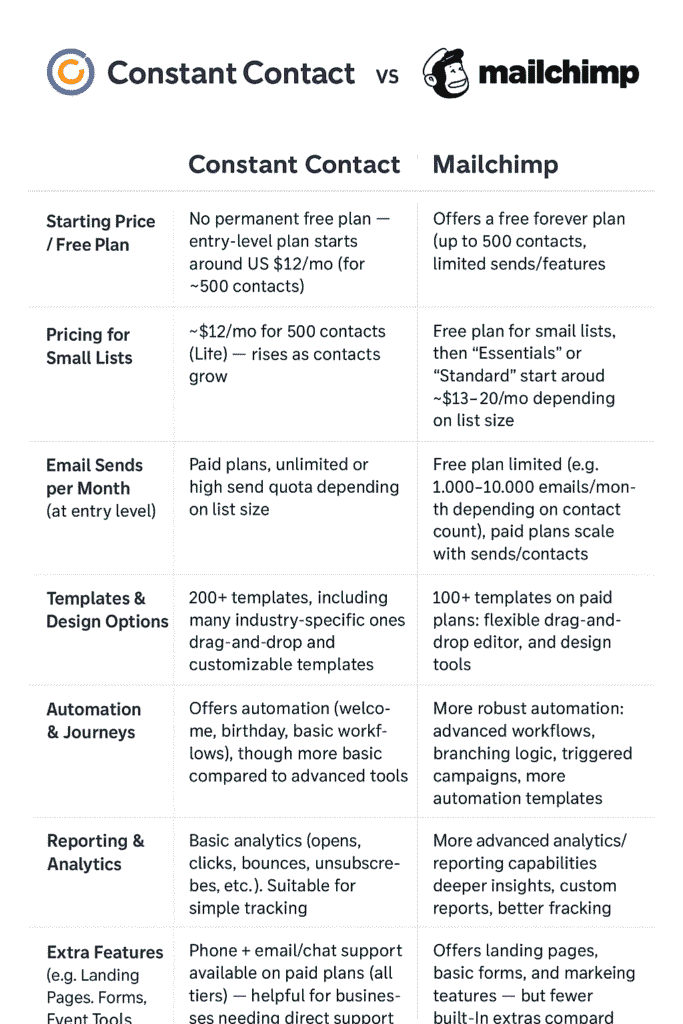
When comparing Mailchimp vs Constant Contact, pricing is often one of the first factors businesses consider. Both platforms offer tiered plans, but they differ in how they structure costs and what features are included at each level.
Mailchimp provides a free plan, which is helpful for very small lists or beginners. Its paid plans scale based on the number of subscribers, and features like advanced automation, A/B testing, and customer journey mapping become available in higher tiers. However, costs can rise quickly as your list grows, so Mailchimp tends to be more budget-friendly only at the lower levels.
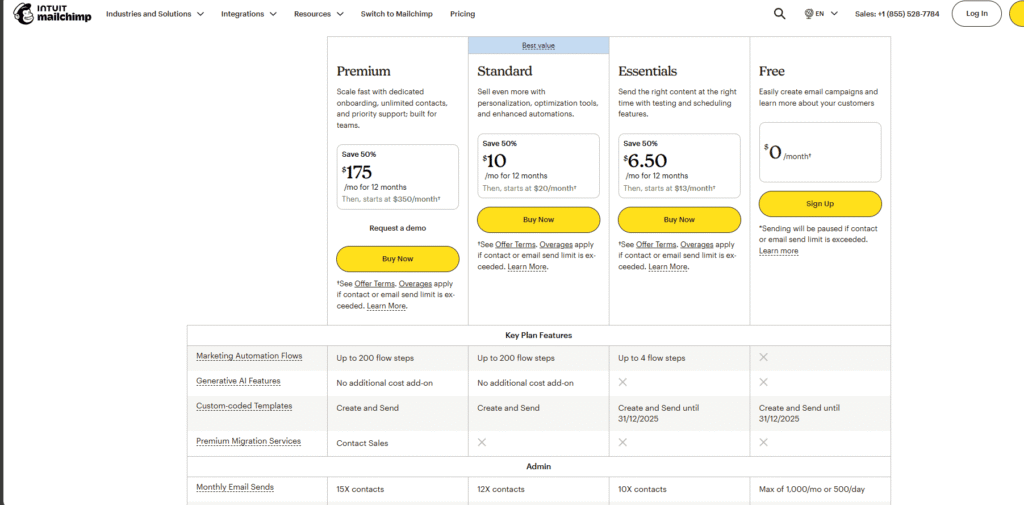
Constant Contact, on the other hand, doesn’t offer a free plan but provides consistent pricing tiers with access to strong customer support and core features from the start. It’s generally more predictable in terms of monthly cost, especially for users with larger lists. Constant Contact’s plans also often include phone support, event marketing tools, and additional niche features not available in Mailchimp’s lower tiers.
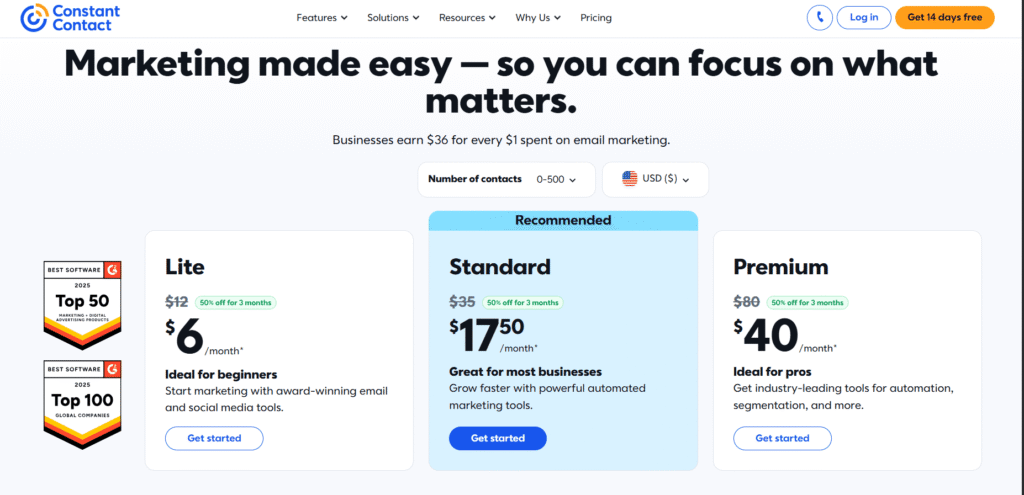
When evaluating Mailchimp vs Constant Contact, it comes down to whether you prefer a free entry point with feature-based upgrades (Mailchimp) or straightforward pricing and support-focused plans (Constant Contact).
Email Templates & Design Tools
When evaluating Mailchimp vs Constant Contact, the quality and flexibility of their email templates and design tools play a major role in how quickly you can create professional-looking campaigns.
Mailchimp offers a wide collection of modern, visually appealing templates. Its drag-and-drop editor is intuitive and allows plenty of customization, including advanced styling options, saved content blocks, and brand-specific design settings. Mailchimp also provides AI-assisted design suggestions, which can help beginners create polished emails with minimal effort.
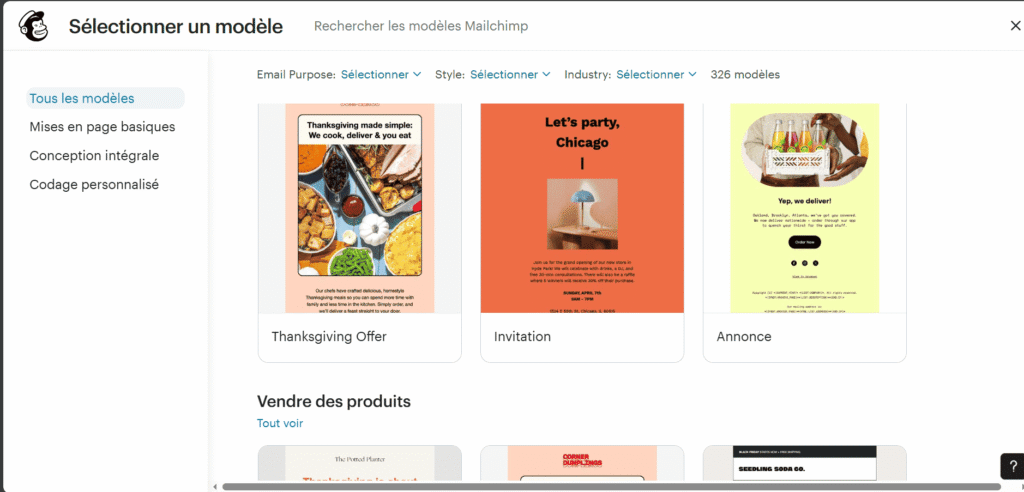
Constant Contact also features an easy-to-use drag-and-drop editor but focuses more on simplicity and consistency. Its templates are clean and functional, though slightly less modern than Mailchimp’s. One advantage is that Constant Contact provides a large library of industry-specific templates, making it easier for small businesses, nonprofits, and local organizations to find designs that fit their needs without major edits.
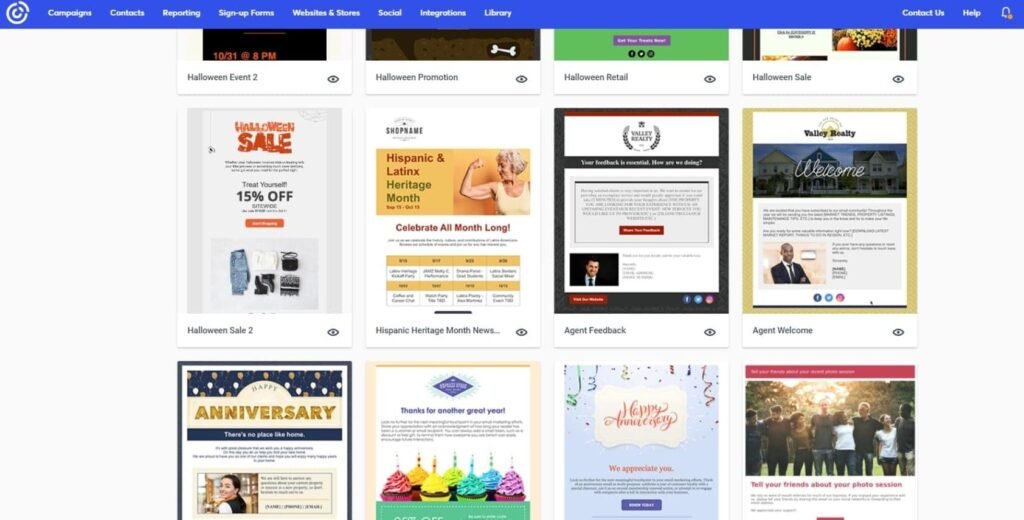
In the comparison of Mailchimp vs Constant Contact, Mailchimp shines when you want more creative control and diverse design options, while Constant Contact appeals to users who prefer straightforward templates and a streamlined editing experience.
Automation Capabilities
When comparing Mailchimp vs Constant Contact, automation is one of the most important factors for businesses that want to save time and deliver targeted, timely emails to their audience.
Mailchimp offers a robust automation system with workflows for almost every stage of the customer journey. You can create automated sequences for welcome emails, abandoned carts, product recommendations, re-engagement messages, and behavior-based follow-ups. Mailchimp also provides advanced tools like customer journey mapping, conditional branching, and predictive analytics on higher-tier plans. This makes it ideal for businesses that want detailed, multi-step automation with full customization.
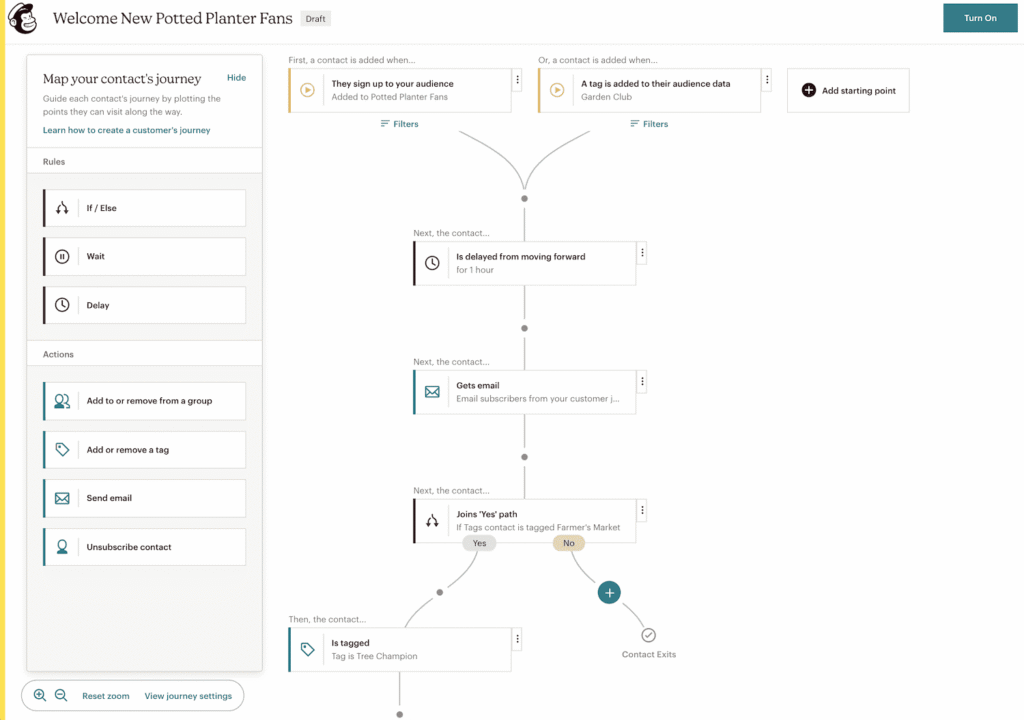
Constant Contact provides automation as well, but its features are simpler. You can set up welcome sequences, birthday and anniversary emails, and basic drip campaigns. It also supports abandoned cart emails when connected to supported e-commerce platforms. While the automation tools are easy to use, they lack the depth and flexibility of Mailchimp’s customer journeys. This works well for beginners and small businesses that want straightforward automation without managing complex workflows.
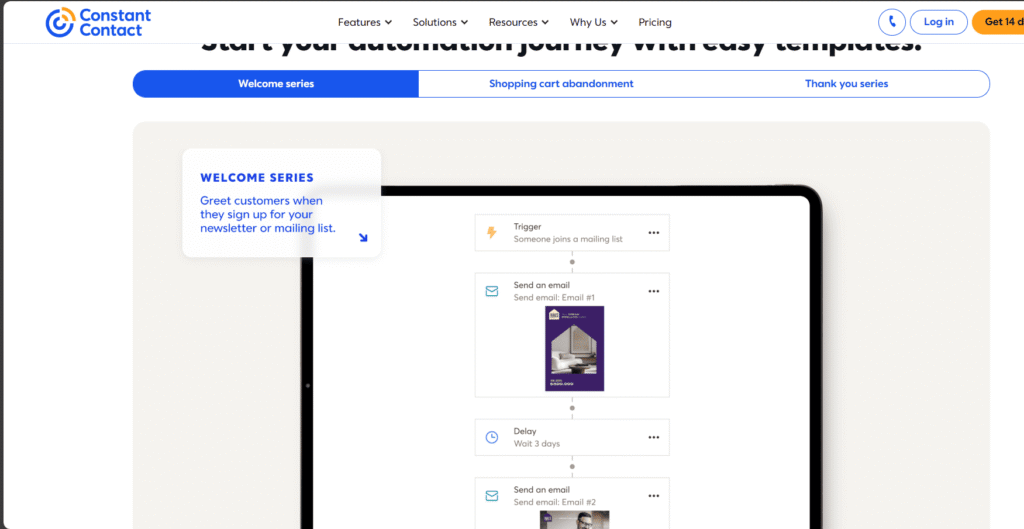
In the Mailchimp vs Constant Contact comparison, Mailchimp clearly offers more advanced automation capabilities, while Constant Contact focuses on simplicity and essential automated workflows.
Integrations & Compatibility
When comparing Mailchimp vs Constant Contact, integrations are a key factor, especially for businesses that rely on multiple tools to run marketing, sales, or e-commerce operations.
Mailchimp excels in this area with a large ecosystem of integrations. It connects seamlessly with major platforms like Shopify, WooCommerce, WordPress, Square, Stripe, and hundreds of CRM, analytics, and productivity tools. Mailchimp also provides a strong API, giving developers more flexibility to build custom connections when needed. This makes it a great fit for growing businesses with complex tech stacks.
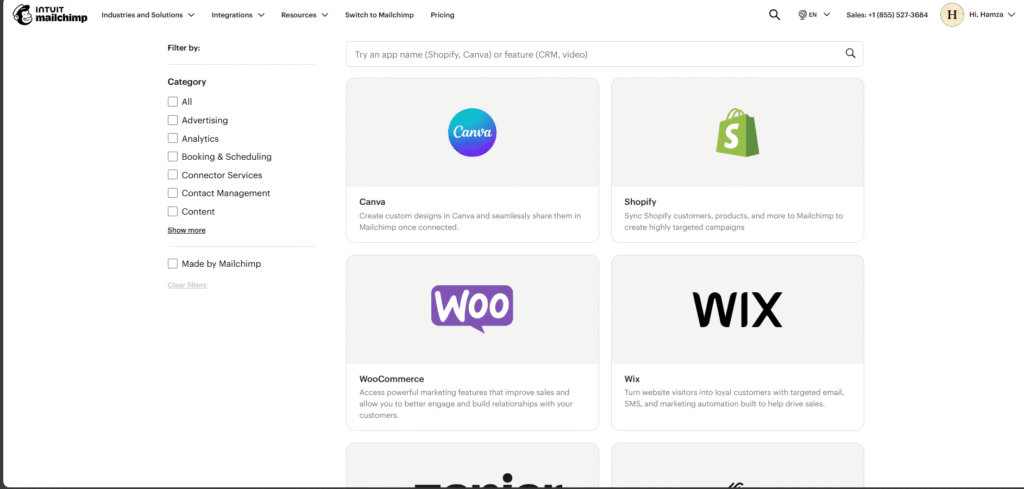
Constant Contact also supports a solid list of integrations, though its library is smaller compared to Mailchimp’s. It connects well with tools such as Shopify, WooCommerce, Eventbrite, Salesforce (via third-party apps), and popular website builders. Constant Contact is especially strong for small businesses that rely on event marketing or want reliable connections with simple website and e-commerce tools.
In the Mailchimp vs Constant Contact comparison, Mailchimp is the more robust choice for advanced or large-scale integrations, while Constant Contact offers dependable compatibility for straightforward marketing setups.
Deliverability Performance
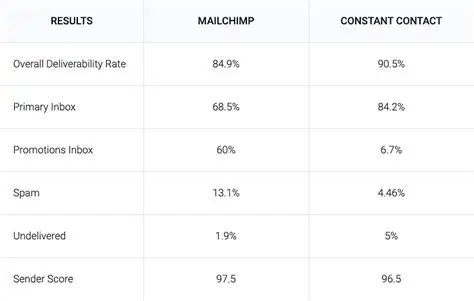
When comparing Mailchimp vs Constant Contact, deliverability performance is a key factor because even the best-designed emails won’t drive results if they don’t reach your audience’s inbox.
Mailchimp has a strong reputation for high deliverability rates. It uses advanced authentication tools like SPF, DKIM, and DMARC support, along with built-in spam filter checks to help improve inbox placement. Mailchimp also automatically cleans inactive or bouncing contacts to protect your sender reputation. However, deliverability can vary depending on how well users follow best practices, especially since Mailchimp enforces stricter rules about list quality.
Constant Contact is consistently praised for excellent deliverability, often slightly outperforming Mailchimp in industry tests. One reason is its hands-on support and list review process, which helps maintain high-quality sender reputations across users. Constant Contact also provides strong authentication tools and proactive monitoring to reduce spam complaints. This makes it a reliable choice for businesses that prioritize inbox placement and want less risk of emails landing in spam folders.
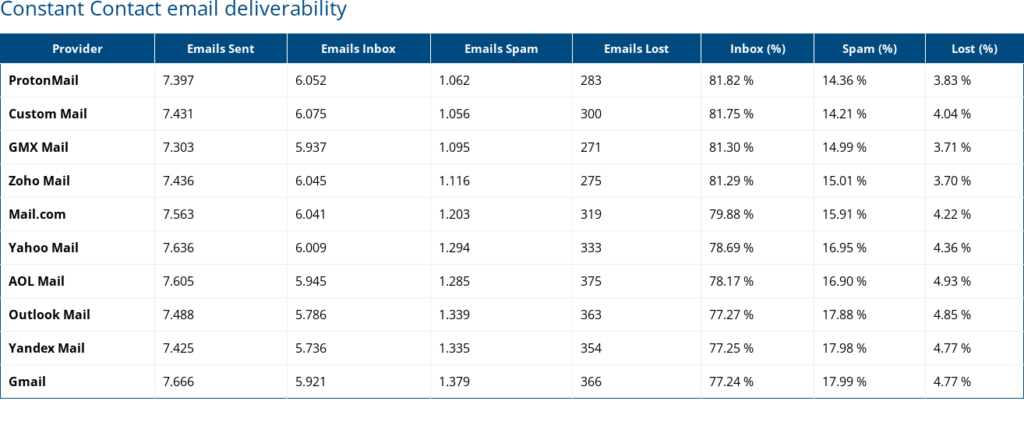
In the Mailchimp vs Constant Contact comparison, both offer strong deliverability, but Constant Contact tends to edge ahead due to its more guided approach to maintaining list quality and sender reputation.
Customer Support
When analyzing Mailchimp vs Constant Contact, customer support is a major point of difference especially if you prefer hands-on help or are new to email marketing.
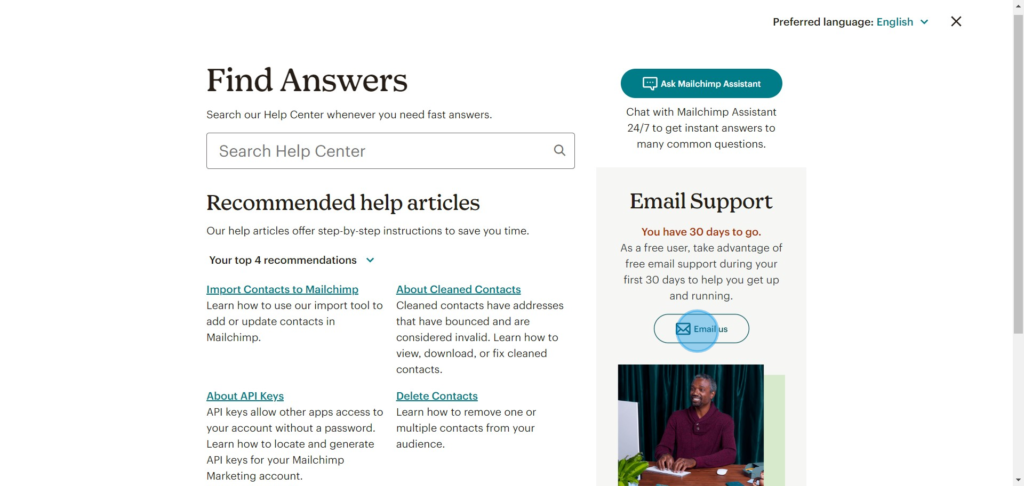
Mailchimp offers several support options, but the level of access depends on your plan. Free users get email support for the first 30 days only, while paid plans provide email and chat support. Higher-tier plans include priority support, but phone support is not included. Mailchimp’s knowledge base is extensive, with tutorials, guides, and step-by-step articles, making it a good option for those who prefer self-service learning.
Constant Contact, by contrast, is well-known for its strong customer support. Users on most plans get access to phone support, live chat, and community forums. The platform is especially appreciated by beginners and small businesses because it provides more personal assistance, including live webinars and onboarding sessions. If you expect to need real-time help, Constant Contact typically offers a more supportive experience.
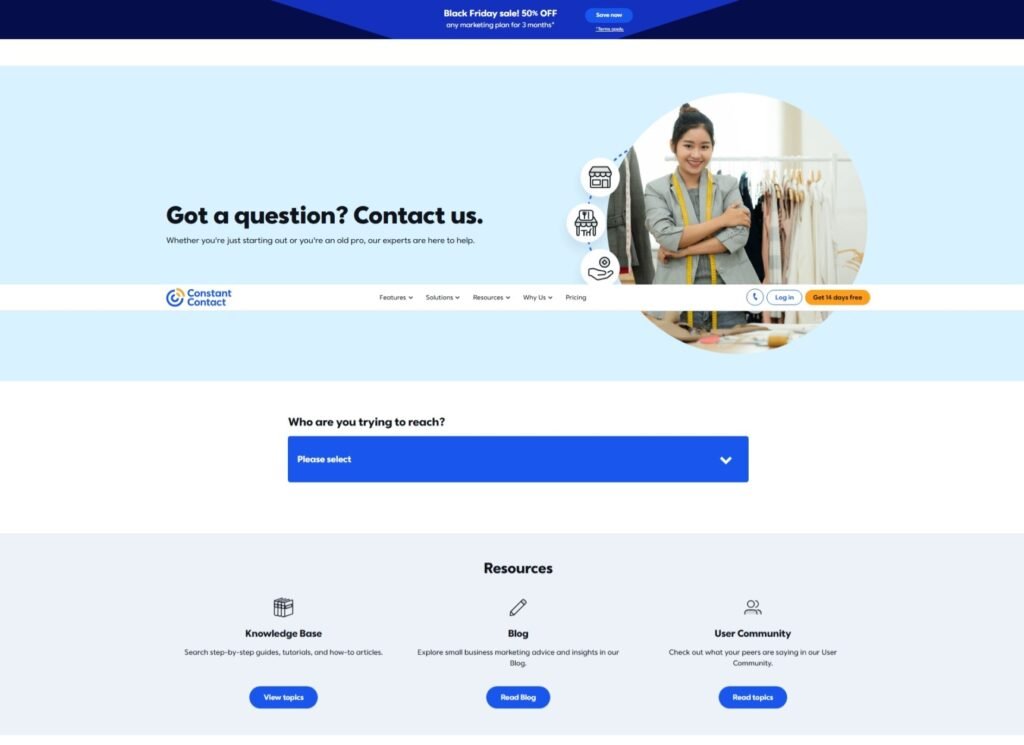
In the Mailchimp vs Constant Contact comparison, Constant Contact stands out for accessibility and hands-on support, while Mailchimp provides solid resources but limits direct support options on lower-tier plans.
A/B Testing & Optimization Tools
When comparing Mailchimp vs Constant Contact, A/B testing is an essential feature for improving email performance. Both platforms offer optimization tools, but one clearly provides more depth than the other.
Mailchimp stands out with strong A/B testing capabilities. You can test subject lines, send times, content blocks, images, and even different layouts depending on your plan level. Higher-tier plans give access to multivariate testing, allowing you to test several variables at once. Mailchimp also provides automated optimization based on performance data, helping you send the best-performing version to the rest of your audience.
Constant Contact does offer A/B testing, but its options are more limited. Currently, users can test subject lines, which is helpful but not nearly as comprehensive as Mailchimp’s testing suite. While Constant Contact does provide performance analytics to help you improve future campaigns, it lacks deeper optimization features like multivariate testing or automated winner selection.
In the Mailchimp vs Constant Contact comparison, Mailchimp is the clear winner for businesses that want detailed testing and strong optimization tools, while Constant Contact works for users who need only basic subject line testing.
CRM & Contact Management Features
When reviewing Mailchimp vs Constant Contact, CRM and contact management tools are important because they determine how well you can organize, track, and engage your audience.
Mailchimp offers built-in CRM features that go beyond basic contact storage. You can view detailed customer profiles, track interactions, segment based on behavior, and assign tags for better organization. Mailchimp also supports predictive insights on higher plans, helping you identify high-value customers and send targeted campaigns. While it’s not a full-scale CRM like HubSpot or Salesforce, it provides more advanced contact management than most email marketing platforms in its category.
Constant Contact includes solid contact management tools but keeps things simpler. You can import contacts, group them into lists, and segment based on basic criteria such as engagement or tags. It’s easy to use and ideal for small businesses that want straightforward organization without complex CRM features. Constant Contact integrates with several third-party CRMs, which is useful if you already rely on an external system for customer tracking.
In the Mailchimp vs Constant Contact comparison, Mailchimp is stronger for users who want built-in CRM functionality with deeper insights, while Constant Contact works best for businesses that prefer simple list management or use a separate CRM.
Landing Pages & Forms
When comparing Mailchimp vs Constant Contact, landing pages and forms play an important role in capturing leads and growing your email list. Both platforms offer these tools, but the capabilities and customization options vary.
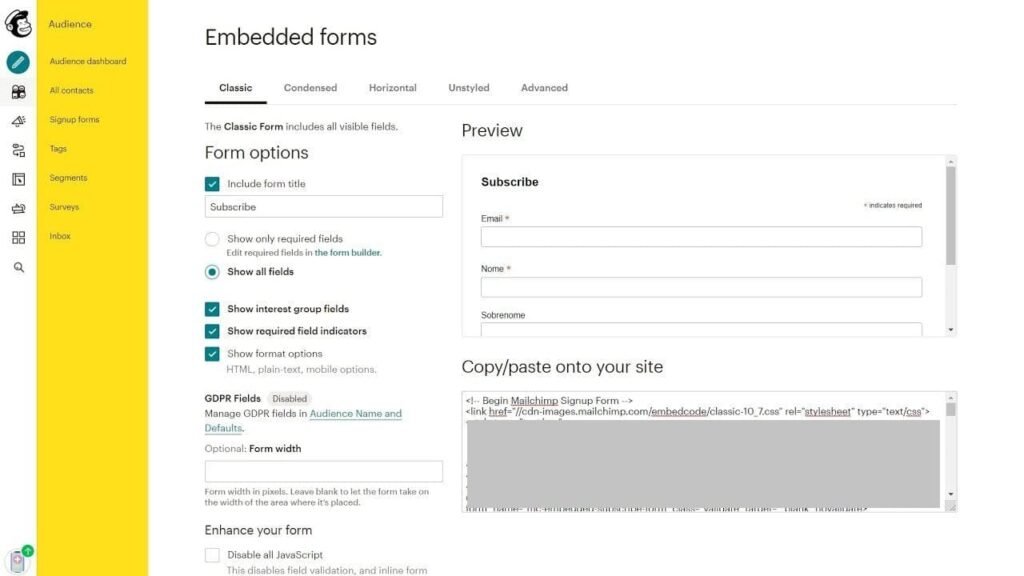
Mailchimp provides a user-friendly landing page builder with modern templates and flexible design elements. You can add product showcases, signup forms, and basic branding, making it easy to create simple promotional pages. Mailchimp forms are also customizable and integrate seamlessly with your lists, allowing you to segment new subscribers automatically. While the builder is intuitive, it’s more limited compared to full dedicated landing page tools.
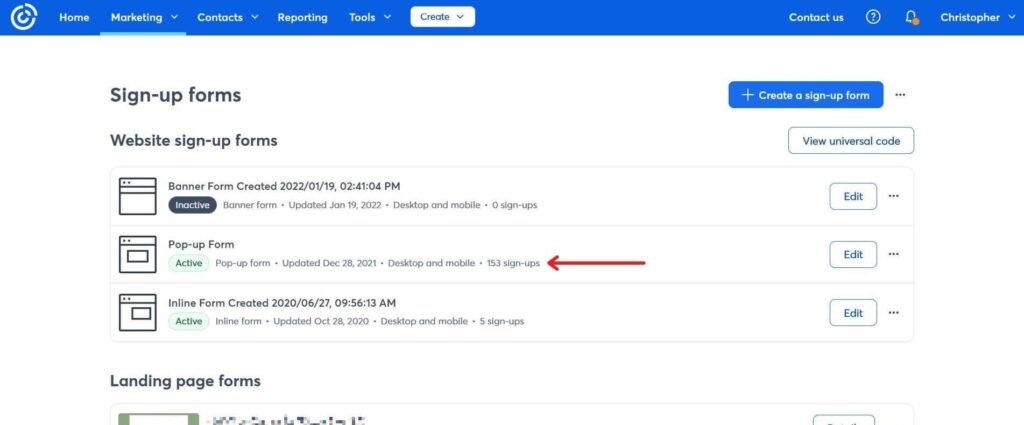
Constant Contact also includes landing pages and signup forms, but its builder focuses more on functionality than design flexibility. The templates are straightforward and reliable, making it easy to publish quick lead-generation pages without much editing. One advantage is the platform’s strong event registration forms, which are ideal for webinars, workshops, and local events—an area where Constant Contact has a clear edge.
In the Mailchimp vs Constant Contact comparison, Mailchimp offers more visually appealing landing pages and form customization, while Constant Contact provides practical and event-friendly options for users who value simplicity.
E-commerce Tools
When comparing Mailchimp vs Constant Contact, e-commerce tools are an important part of the decision especially if you run an online store and want email marketing to work seamlessly with your checkout, product catalog, and customer data.
Mailchimp offers strong e-commerce capabilities, including deep integrations with platforms like Shopify, WooCommerce, BigCommerce, Magento, and Square. These integrations allow you to sync product data, track purchase behavior, and send automated campaigns such as abandoned cart emails, product recommendations, and post-purchase follow-ups. Mailchimp’s product recommendation engine is particularly useful for stores wanting to increase average order value and personalize marketing based on browsing or purchase history.
Constant Contact also provides useful e-commerce tools, but they are simplified compared to Mailchimp. It supports integrations with platforms like Shopify and WooCommerce, and it offers tools for creating basic product promotions and automated abandoned cart emails (depending on the integration). Constant Contact is a solid choice for small online stores that need easy, reliable tools without advanced personalization features.
In the Mailchimp vs Constant Contact comparison, Mailchimp is better suited for businesses seeking deeper automation, personalized product recommendations, and advanced behavioral targeting. Constant Contact works best for smaller e-commerce operations that want simple, manageable marketing support.
Scalability for Growing Businesses
When evaluating Mailchimp vs Constant Contact, scalability is a critical factor for businesses planning to grow their audience, expand their marketing efforts, or adopt more advanced tools over time.
Mailchimp is designed with scalability in mind. As your business grows, you can move through its tiered plans to unlock more advanced automation, multivariate testing, predictive insights, and enhanced reporting features. Mailchimp’s extensive integration ecosystem also makes it easier to expand your marketing stack as your needs evolve. However, costs can increase quickly with larger contact lists, so scaling with Mailchimp may require a higher budget.
Constant Contact is also capable of supporting growing businesses, but its scalability focuses more on simplicity than advanced functionality. It offers stable performance with large contact lists and provides reliable tools for core email marketing needs. While it integrates well with essential business platforms, its feature set remains more consistent across tiers, which may be an advantage for businesses that don’t need highly advanced marketing automation as they grow.
In the Mailchimp vs Constant Contact comparison, Mailchimp is the stronger choice for growth-driven businesses that want increasingly sophisticated tools, while Constant Contact is ideal for organizations that plan to scale in size but prefer to keep their marketing simple and predictable.
Who is the winner? MailChimp vs Constant Contact
When comparing Mailchimp vs Constant Contact, the right choice ultimately depends on your business needs, marketing experience, and long-term goals. Both platforms offer powerful tools, but they excel in different areas.
Mailchimp is ideal for businesses that want advanced automation, deeper customization, stronger A/B testing, and a wide range of integrations. It’s especially well-suited for growing companies, e-commerce stores, and marketers who want more control over design and optimization. However, its pricing can increase quickly as your list expands, making it more cost-effective in the early stages than at scale.
Constant Contact shines for users who prioritize simplicity, strong customer support, and consistently high deliverability. It’s a great choice for small businesses, nonprofits, and beginners who want an easy-to-use platform without a steep learning curve. While it doesn’t offer the same level of advanced features as Mailchimp, it provides reliable essentials and excellent hands-on guidance.
In the end, the Mailchimp vs Constant Contact decision comes down to whether you value advanced marketing capabilities (Mailchimp) or simplicity and support (Constant Contact). Both platforms can help you run effective email campaigns, the best pick is the one that aligns most closely with your goals, budget, and growth plans.
FAQ
Which is better: Mailchimp or Constant Contact?
Mailchimp is better for businesses that need advanced features like automation, audience segmentation, and detailed analytics. Constant Contact is a better choice for beginners and small teams that want a simple, easy-to-use email marketing tool without complexity.
Is Mailchimp cheaper than Constant Contact?
Mailchimp can be cheaper at the beginning thanks to its free plan for small email lists. However, as your subscriber list grows, Mailchimp’s pricing increases. Constant Contact does not offer a free plan, but its pricing can be more predictable for larger lists.
Which is easier to use?
Constant Contact is widely considered easier to use, especially for users with little or no email marketing experience. Mailchimp offers a more powerful interface, but it may take more time to learn due to its advanced tools.
Which platform has better automation?
Mailchimp clearly offers better automation features, including behavioral triggers, customer journeys, and advanced workflows. Constant Contact provides basic automation options, which are suitable for simple campaigns but limited for advanced marketing strategies.
Which is better for small businesses?
Both platforms work well for small businesses. Constant Contact is ideal for those who want quick setup and strong support, while Mailchimp is better for small businesses that plan to grow and need more advanced marketing capabilities.